


Richmond Park Associates - FZCO is a United Arab Emirates Free Zone Company with limited liability, incorporated pursuant to Law n. 16 of 2021, and registered with the Dubai Silicon Oasis Free Zone.
By Maria Eirini Liodi
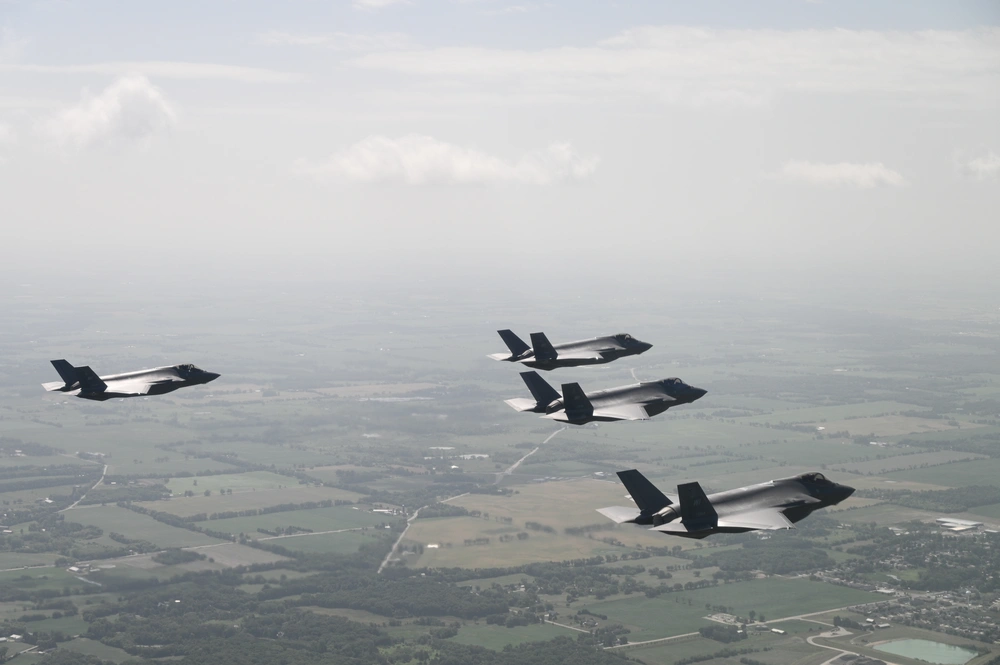
A lot has happened in Turkey this week, but one thing has not changed: Ankara’s standing as a deeply divisive ally in U.S. Congressional discussions regarding possible F-35 programme re-entry. While reports suggest Turkey is en route to divest itself of its Russian S-400 air defence systems, critics argue that such a move does little to address broader concerns regarding Turkey’s reliability as a United States ally. Although a trusted NATO ally in theory, critics in Washington point to Turkey’s troubling track record on relations with Russia, terrorist financing, human rights violations, and a persistent threat to several U.S. partners in the Eastern Mediterranean.
What may change, however, is Turkey’s ownership of Russian S-400 air defense systems. Until last week, debate in the U.S. Congress focused on whether the proposed sale of General Electric F110 engines represented the first step towards Turkey’s eventual return to the F-35 programme. Today, discussions have struck a more serious note as reports that Ankara may sell its S-400 systems circulate.
The arguments against Turkish re-entry in the F-35 program centered on the country’s ownership of S-400 systems, coming at odds with U.S. law, particularly, Countering America’s Adversaries Through Sanctions Act (CAATSA) and Section 1245 of the Fiscal Year 2020 National Defense Authorization Act (NDAA). Following positive U.S.-Turkey bilateral talks in the backdrop of the Ankara NATO Summit, Turkey may see the removal of the legal obstacles it faces through a sale, as early as today, 10 July.
While details of the prospective sale remain unclear, most reporting suggests the systems could be transferred to a Gulf country, with the United Arab Emirates and Qatar emerging as the most frequently cited potential buyers.
Within this context, Turkey continues to position itself adversarially to other U.S. allies, namely Greece, Cyprus, and increasingly, Israel. This is underscored through public comments from the Turkish administration, namely, Foreign Minister Hakan Fidan’s comments just days before the NATO Summit on 3 July, that Israel has become a “burden that humanity can no longer bear”.
For opponents of Turkey’s return to the F-35 programme, the debate has not been solely anchored to the S-400 issue. The arguments put forth posit that even if the legal barriers of the Russian systems are removed, exigent strategic concerns remain over how advanced fifth-generation aircraft could affect the regional military balance in the Eastern Mediterranean and broader Middle East. Namely, how Turkey may seek to use F-35s to threaten its neighbours further – be that in pursuit of its expansionist vision in the Aegean, or its efforts to seek dominance in opposition to Israel.
Uncertainty remains pending official confirmation of any agreement. In parallel, questions also persist regarding possible conditions attached to the sale and whether the transaction could yet face further political or legal obstacles. Both the Greek Prime Minister and the Israeli Prime Minister have positioned themselves publicly against this acquisition, but it is unclear whether the stance of these allies will move the needle in a different direction.
Whatever the conditions of any agreement may be, one thing is certain – Turkey’s prospective sale of the S-400 systems and its potential return to the F-35 programme would mark a not-so-insignificant shift in the regional balance of power. The implications would extend well beyond Turkey itself, particularly as Gulf states continue to reassess their security posture following the Iranian bombardments earlier this year.