


Richmond Park Associates - FZCO is a United Arab Emirates Free Zone Company with limited liability, incorporated pursuant to Law n. 16 of 2021, and registered with the Dubai Silicon Oasis Free Zone.
By Maria Eirini Liodi
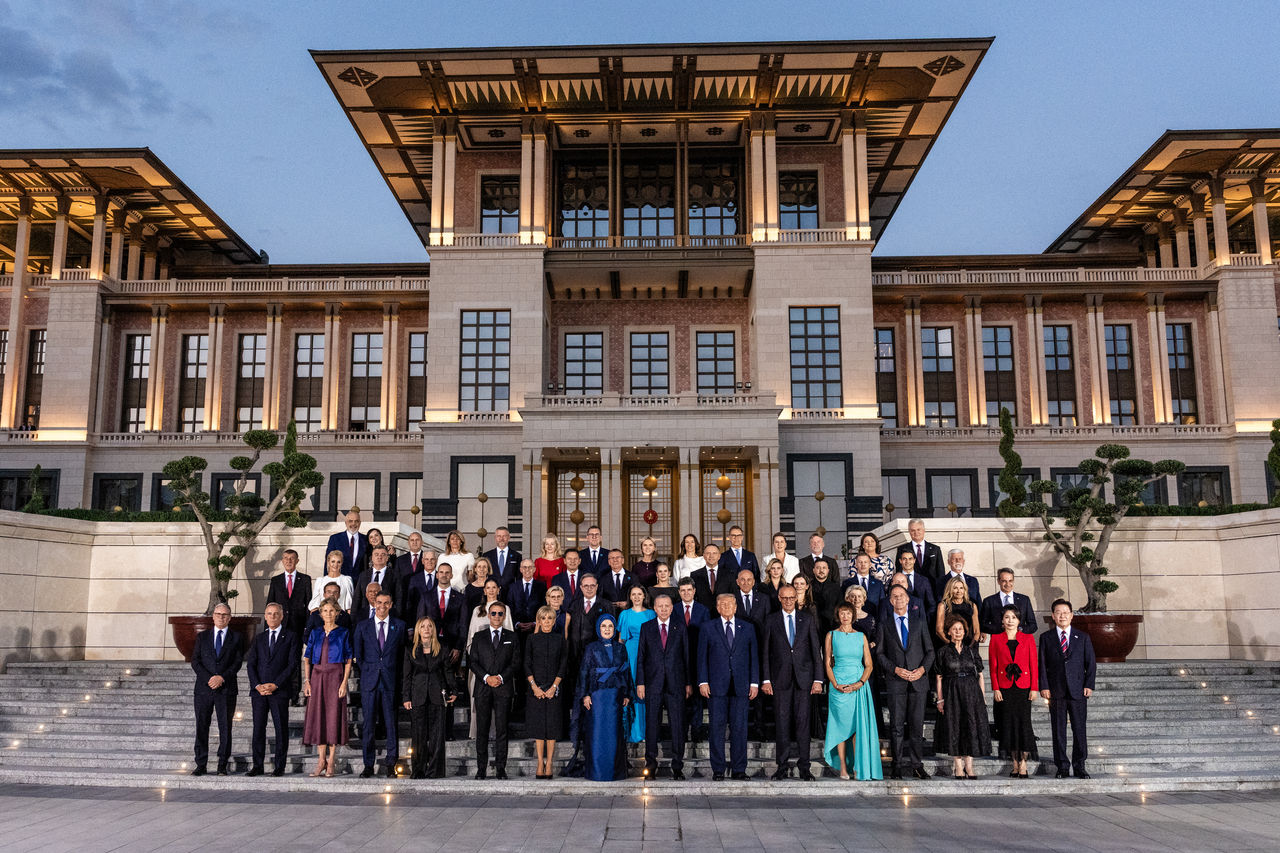
Last week’s NATO Summit in Ankara marked an important event in the annual political calendar. Now a year after the commitments made at the 2025 Hague Summit, where does the NATO Alliance stand?
A Summit Focused on Delivery
Leading up to this year’s Summit, Secretary General Mark Rutte emphasized that this year’s gathering would be centred on ‘delivery’ – producing tangible results based on the commitments made at the Hague Summit and outlining the alliance’s priorities for the year ahead. Indeed, the alliance saw an increase of more than $139 billion in defence investment from European members and Canada.
While President Trump’s longstanding criticism that European allies are not contributing enough to collective defence continued to loom over the Summit, discussions focused primarily on the progress achieved since The Hague. With that said, several allies including Slovenia, Belgium, Spain, and the Czech Republic, have yet to meet even the alliance’s old spending target of 2% of GDP.
Looking forward, more than $50 billion in new defence procurement agreements were announced in Ankara. These contracts involve major defence manufacturers, such as Swedish SAAB, Lockheed Martin, Northrop Grumman, and Airbus.
Strengthening NATO’s Defence Industrial Base
At the NATO Summit Defence Industry Forum on 7 July, Secretary General Rutte announced two new initiatives. The first, the NATO Front Door for Industry, aims to provide a new platform that simplifies the way in which defence companies engage with NATO. The second, the NATO Engine, aims to better coordinate defence manufacturing capacity across the alliance.
Alongside this, 38 multinational High Visibility Projects (HVPs) have been launched by allies, spanning air and missile defence, ammunition production, critical raw materials, digital transformation and more.
New Defence Financing Initiatives
The Summit also came with the announcement of two important financing initiatives for the alliance. The first is the Defence, Security, and Resilience Bank (DSRB), led by Canada and Luxembourg and supported by nine other signatories, which aims to provide affordable and accessible credit for the defence needs of NATO allies. The planned launch date of the DSRB is in 2027, with the headquarters to be based in Canada and a European base in Luxembourg.
The second initiative, the Multilateral Defence Mechanism (MDM), led by the United Kingdom in partnership with the Netherlands, Finland, and Poland, also has a targeted launch date in 2027. Unlike the DSRB, the MDM is designed to facilitate joint procurement and stockpiling of equipment in a more coordinated manner across different allied nations, while allowing participating states to keep these purchases off their national balance sheets.
These initiatives complement the European Union’s Security Action for Europe (SAFE) defence loan instrument, adopted in May 2026. SAFE will provide up to €150 billion in long-term loans to Member States to strengthen defence production across the EU, Ukraine, and the wider European Economic Area.
Taken together, these initiatives signify the urgency of scaling up defence industrial capabilities across both NATO and the EU. The war in Ukraine has exposed weaknesses in the defence industrial base, procurement, and stockpiles, as well as highlighting potential threats. Hence, it has reinforced the urgency of building a more resilient and coordinated defence ecosystem in the EU and in NATO countries.
Ukraine Remains Central
Another discussion point that took centre stage was the war in Ukraine. Allies reaffirmed their continued support, with bilateral and multilateral agreements amounting to €70 billion ($80 billion) for military equipment, as well as assistance and training for Ukraine. These financial commitments accompany the EU’s commitment to provide multi-year financing through the Ukraine Support Loan, which was finalised in April 2026.
On a further positive note for the country, President Trump announced that the U.S. would grant Ukraine a licence to produce its own Patriot air defence systems – a system crucial to countering missile attacks from Russia. Granting a license to produce Patriots domestically is not a frequent occurrence. On the contrary, to this day only Japan has acquired a full Patriot license, while Germany holds a licence to produce an older version of the current Patriot system.
As such, the ability to build these systems domestically would provide a significant boost to Ukraine’s war efforts, since while the U.S. has been exporting Patriots to Ukraine, the shrinking supply of the missiles poses a significant problem.
On the Sidelines
On the sidelines of the summit, discussions also focused on the possibility of Turkey’s re-entry into the F-35 programme, alongside President Trump’s announcement of a resumption of hostilities in Iran.
While the trajectory of these developments remains uncertain, they reflect the fact that the alliance’s priorities continue to evolve alongside an increasingly complex security and geopolitical landscape globally.